WHAT HAPPENS WHEN YOU CAN'T HAVE KIDS?
Updated: Mar 1, 2024
When Peter Munro asked me to be part of his article to men that weren't able to become fathers for The Sydney Morning Herald I never knew I would be so open, honest and vulnerable. Still today I'm surprised how much I shared and how much was printed, Im still in two minds as to if it was a good idea of now, but to those men that have reached out saying it helped their journey or gave a voice they could show family and friends, thank you.
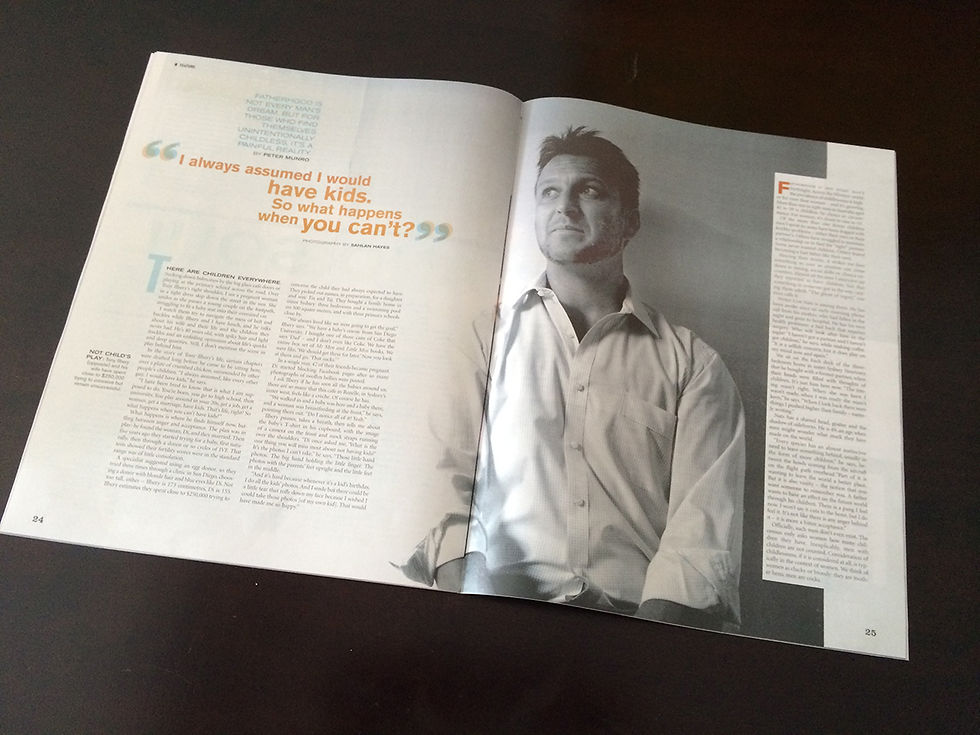
Fatherhood is not every man's dream, but for those who find themselves unintentionally childless, it's a painful reality.
There are children everywhere. Sucking down babycinos by the big glass café doors or playing at the primary school across the road. Over Tony Ilbery's right shoulder, I see a pregnant woman in a tight dress skip down the street in the sun. She smiles as she passes a young couple on the footpath, struggling to fit a baby seat into their oversized car.
I watch them try to navigate the mess of belt and buckles while Ilbery and I have lunch, and he talks about his wife and their life and the children they never had. He's 40 years old, with spiky hair and light freckles and an unfailing optimism about life's quirks and deep quarries. Still, I don't mention the scene in play behind him.
In the story of Tony Ilbery's life, certain chapters were drafted long before he came to be sitting here, over a plate of crumbed chicken, surrounded by other people's children. "I always assumed, like every other guy, I would have kids," he says.
"I have been bred to know that is what I am supposed to do. You're born, you go to high school, then university. You play around in your 20s, get a job, get a woman, get a marriage, have kids. That's life, right? So what happens when you can't have kids?"
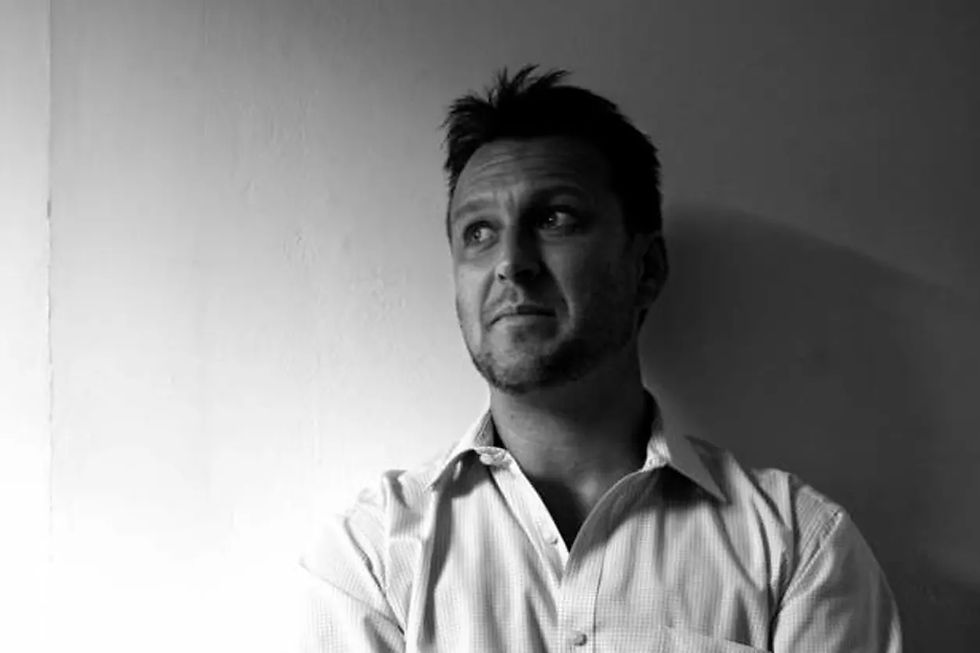
Not child's play: Tony Ilbery and his wife have spent close to $250,000 trying to conceive but remain unsuccessful. Photo: Sahlan Hayes
What happens is where he finds himself now, battling between anger and acceptance. The plan was in play: he found the woman, Di, and they married. Then five years ago they started trying for a baby, first naturally, then through a dozen or so cycles of IVF. That tests showed their fertility scores were in the standard range was of little consolation.
A specialist suggested using an egg donor, so they tried three times through a clinic in San Diego, choosing a donor with blonde hair and blue eyes like Di. Not too tall, either - Ilbery is 173 centimetres, Di is 155. Ilbery estimates they spent close to $250,000 trying to conceive the child they had always expected to have. They picked out names, in preparation, for a daughter and son: Tia and Taj. They bought a family home in inner Sydney: three bedrooms and a swimming pool on 500 square metres, and with three primary schools close by.
"We always lived like we were going to get the goal," Ilbery says. "We have a baby's onesie from San Diego University. I bought one of those cans of Coke that says 'Dad' - and I don't even like Coke. We have the entire box set of Mr Men and Little Miss books. We were like, 'We should get these for later.' Now you look at them and go, 'That sucks.' "
In a single year, 42 of their friends became pregnant. Di started blocking Facebook pages after so many photographs of swollen bellies were posted. I ask Ilbery if he has seen all the babies around us; there are so many that this cafe in Rozelle, in Sydney's inner west, feels like a crèche. Of course he has.
"We walked in and a baby was here and a baby there, and a woman was breastfeeding at the front," he says, pointing them out. "Do I notice all of it? Yeah."
Ilbery pauses, takes a breath, then tells me about the baby's T-shirt in his cupboard, with the image of a camera on the front and mock straps running over the shoulders. "Di once asked me, 'What is the one thing you will miss most about not having kids?' It's the photos I can't take," he says. "Those little hand photos. The big hand holding the little finger. The photos with the parents' feet upright and the little feet in the middle.
"And it's hard because whenever it's a kid's birthday, I do all the kids' photos. And I smile but there could be a little tear that rolls down my face because I wished I could take those photos [of my own kid]. That would have made me so happy."
The deep desire to father a child can be difficult to explain. I remember it as something instinctive and beyond questioning, and now I can't imagine life without my two daughters. Then I remember my wife's three miscarriages and question how something that is supposed to be so natural can also be so hard.
Tony Ilbery and his wife stopped trying to conceive last year, after almost five years of IVF cycles and donor eggs and dreamy imaginings and children's names and pain - both physical and emotional. I ask him why he wanted a child and he smiles and tells me about passing on his love of Bob Dylan. And about "that moment when someone little looks up into your eyes". "Do you just accept it and move on? I don't just accept it but I am not going to sit home and cry because of something I haven't experienced," he says.
"You sort of find a mid-ground. My sister has two kids and we spend a lot of time with them. I love it. Whereas my wife finds it really hard seeing me play with them because it's a reminder to her of what we're not going to have."
In his cupboard at home is that unused collection of baby clothes and books. He will give the books to neighbours, he says. But not the clothes; he says he can't bear the thought of seeing them on someone else's children.
The week before we met for lunch, he was in Fiji celebrating his 40th birthday. The night before they returned home, he sat on a beach with his wife, Di. They both lit candle lanterns and squeezed hands as they put the lanterns in the water and watched them float away. "It was a way of saying goodbye," Ilbery says. "Of making a wish, not for babies but for our lives. Of letting go because you have to."
He is thinking of making a similar tribute with the unused baby clothes; perhaps burning them in a pile on a beach one night. "It will be a symbolic letting go," he says. "Undoubtedly both of us will have a good little cry - my wife might have a good long cry. How does this journey end for people? It doesn't, it just ends with accepting."
Men shouldn't want children because they want someone to love them or a little person to live their own lives through, he says. "Having a child is about you giving all your love to someone. Your job as a father is just to give undying, unquestioning love 24/7 to that little being. If they love you back, that's a bonus for you."
I say to him, "I don't know if this is a shitty thing to hear, but you would have made a good dad."
He laughs a little. "That's flattering," he says. "But that does make me sad, it really does. I liked the idea I could have played a part in somebody's life."
Originally printed April 2014 Sydney Morning Herald